
Placentia City Directory Years on Record
The strongest verified city directory evidence is regional rather than a single Placentia-only shelf. The National Archives inventory confirms Orange County directories that include Placentia in 1926, 1929, and 1931, while listing Atwood separately. Orange County Archives, the Placentia Library History Room, the California State Library, State Archives, and the CSUF oral-history archive add related channels. Exact local publisher runs, reverse sections, and telephone-book years are not published, so the table keeps those gaps visible.
| Collection | Years | Where held | Access |
|---|---|---|---|
| Orange County directories including Placentia | 1926, 1929, 1931 | NARA inventory and microfilm | NARA consultation |
| Orange County directories and newspapers | Unspecified; most holdings pre-1960 | Orange County Archives | In person, Monday-Friday 9-noon and 1-4:30 |
| California city directories and telephone books | Placentia years not exposed | California State Library | Search Orange, then Placentia |
| Local books, photographs, videos, maps, and oral histories | Collection extent varies; 5,000+ photographs | Placentia Library History Room | General collection; manuscripts by appointment |
| PYLUSD high-school yearbooks | Past years; exact run unpublished | Placentia Library History Room | Ask staff for the relevant year |
| Naturalization records | 1889-1944 | California State Archives | Archives or microfilm channel |
| Homestead records | 1889-1926 | California State Archives | Archives or microfilm channel |
| Regional oral histories | 6,000+ interviews archive-wide | CSUF Lawrence de Graaf Center | Search or contact the center |
These are not interchangeable shelves. NARA proves that the three regional years exist in the inventory. The local library supplies community context and staff guidance. Orange County Archives holds county-level directories, newspapers, property, vital, and photograph material. The State Library's catalog workflow can expose a regional title that does not put Placentia in its title. A complete city directory search records the keeper, title, year, publisher if shown, locality heading, and access route.
Open the NARA directory inventory for the clearest verified year set in a Placentia city directory search.
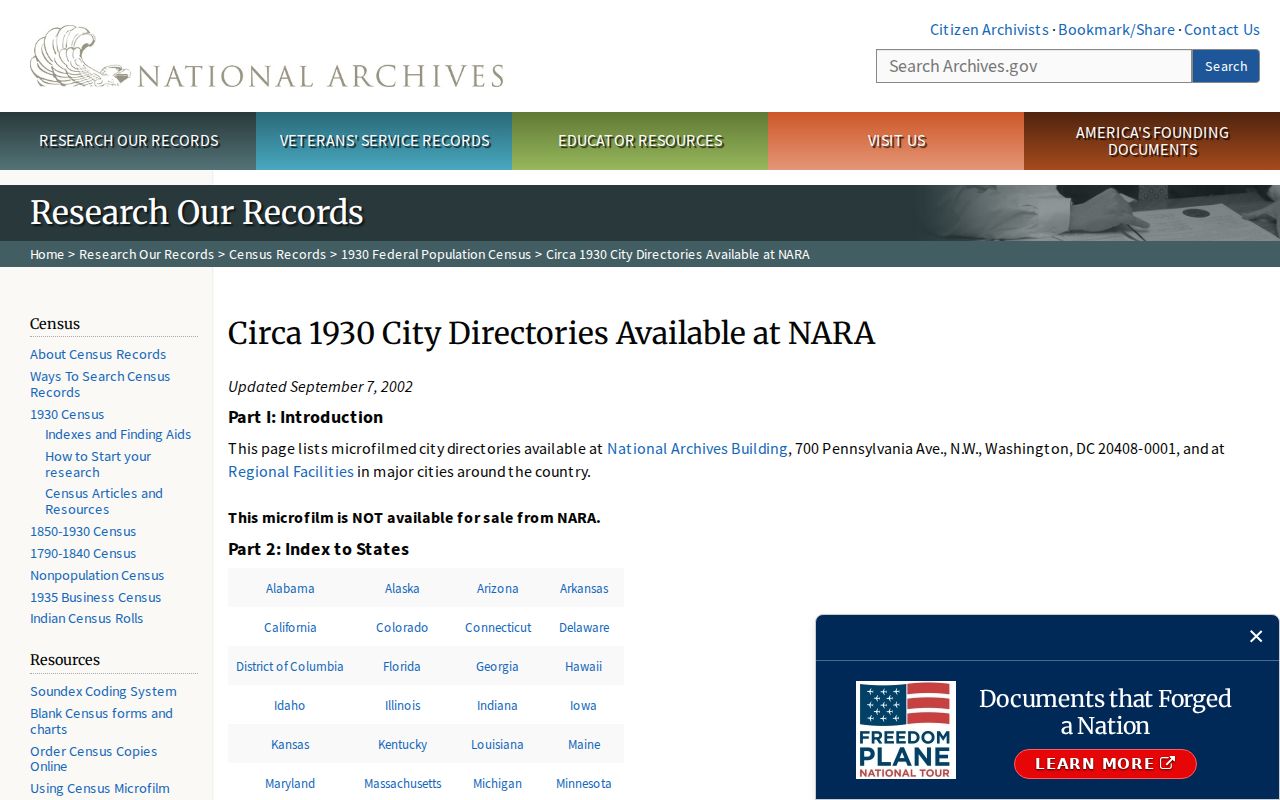
Use the NARA listing as a year guide, then confirm the actual volume, page, locality heading, and consultation path.
Placentia and Atwood Need Separate Searches
NARA lists Placentia and Atwood as separate locality entries in the same regional directory research. A surname absent from the Placentia heading may appear under Atwood, and a street section may use a locality label that does not match a modern city search. The two headings should be logged separately rather than merged into one assumed resident list.
Placentia began as part of Rancho San Juan Cajón de Santa Ana, developed around citrus and the 1910 Santa Fe rail campaign, and incorporated in 1926. Those eras explain why a directory search should also use Old Town, Packing House District, Bradford, Santa Fe Avenue, and Atwood as research terms. They do not prove that a particular person lived at a particular address. Verify each entry against the title page, locality statement, street section, census, deed, or another dated source.
The directory publisher is not identified on NARA's page. A city directory search should preserve that uncertainty instead of assigning a publisher from a generic national example.
Search Orange County, Then Placentia
The California State Library's Orange County guide gives a two-pass method. Search the city-directory database for the county term Orange, then repeat with Placentia. Repeat the same pair of searches in the telephone-books database. This matters because a regional title may be cataloged under Orange County even when its pages include a Placentia locality or street section.
- Open the California State Library Orange County research guide and record each catalog hit.
- Capture the title page, publication year, publisher, coverage statement, and call number before transcribing an entry.
- Search the county term again in telephone books, then repeat with Placentia and Atwood.
- Ask the holding library whether the volume contains alphabetical, street, business, or locality sections.
A catalog hit is a route to a volume, not a sample resident line. Keep the call number and the staff response with the family-history notes so another researcher can reproduce the search.
Reading a Placentia City Directory Entry
No actual Placentia directory page was openly inspectable in the research, so a fabricated sample entry would be misleading. The defensible approach is to transcribe the volume's own line and photograph or note its abbreviation key first. A period entry may include a surname, given name or initials, a possible spouse notation, an occupation or period role, a residence or business address, and a symbol for home, room, or widow status. Confirm every mark against that volume.
| Name | Surname plus given name or initials; retain the printed spelling and punctuation. |
|---|---|
| Period role | An occupation or civic descriptor may help date a person, but it is not a current-status record. |
| Address | House number and street, with a locality heading; do not modernize the historical number. |
| Spouse or widow mark | Possible relationship clue such as a parenthetical spouse or a widow abbreviation, only when the key confirms it. |
| Section and citation | Alphabetical, street, business, or locality section, plus page, volume year, title, and publisher. |
- Criss-cross directory
- A reverse section arranged by street and number when a particular volume contains one.
- Householder index
- An index organized around a head-of-household entry or other household reference; the exact form must be checked in the volume.
- Abbreviation key
- The volume's legend for short marks such as h, r, or wid; confirm the meaning before reading entries.
- Locality heading
- The city or community label under which a regional directory groups its pages.
A current address question belongs in the modern parcel and deed chain, while a historical entry belongs in its own year and locality context. When a directory find needs modern corroboration, the address-keyed trail is handled in the Placentia street directory page.
Pair Placentia Directories with Census Years
A city directory becomes more useful when its year is paired with a census or another dated record. The 1929 directory sits near the public 1930 federal census, but the two sources were created at different moments. A census describes a household on the enumeration date. A directory reflects publisher canvassing. A name present in one and absent in the other needs a qualified explanation, not an automatic conclusion.
- Locate the surname and given name or initials under Placentia, then check Atwood and any street section.
- Log the exact address, spouse notation, period role, locality, page, and volume citation.
- Compare the 1929 entry with the 1930 census and note differences in timing, spelling, or household composition.
- Repeat the same log for 1926 and 1931, keeping a blank year as an unresolved gap.
- Close the trail with a deed, newspaper, yearbook, photograph, manuscript, oral history, obituary, or cemetery record when appropriate.
The latest public federal population census in 2026 is 1950 under the 72-year rule. The verified Placentia directory set is much narrower. Missing from a directory can mean a changed name, a different locality heading, a canvass omission, a move, or death. Search neighboring years and address sections before deciding which explanation fits.
Placentia History Room Files Beyond Directories
The History Room at 411 E. Chapman Avenue adds the local context that a thin directory line cannot provide. Its general local-history material is described as accessible during library hours. Manuscripts and ephemera require an appointment. Family collections named in the research include Ziegler, MacFadden, Gerhold, Richards, Lyons, Carpenter, Higuera, and Kraemer papers. Civic and citrus-packing records can connect a household name to an organization, school, photograph, or local event.
Contact the History Room at (714) 528-1906 extension 224 or historyroom@placentialibrary.org. Supply surnames, aliases, organizations, approximate dates, street or APN if known, and the relationship to the research. Ask staff for the unpublished shelf inventory of city and county directories, telephone books, reverse or criss-cross books, newspapers, obituary indexes, and yearbooks. The library does not publish those exact runs.
Open the Placentia History Room collection source for the named local collection. It is an important family-history layer, but it is not a current member directory.
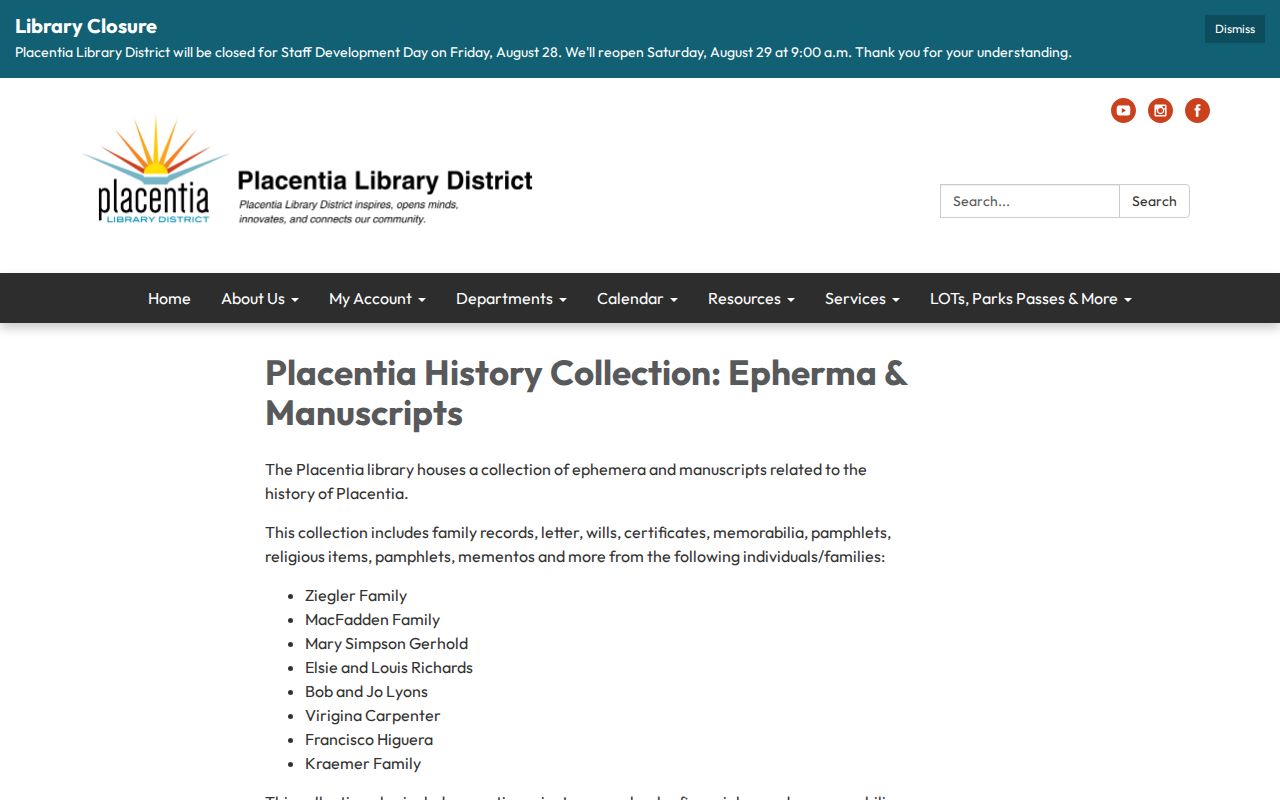
The History Room source view shows why staff consultation is needed before assuming that a specific directory or obituary run is on the shelf.
Placentia's Municipal Archive Search
The Placentia Archive Center is a separate municipal channel for agendas, notices, newsletters, and other city material searchable by keyword, archive, or date. It can add civic context to a historical resident search, especially when the question concerns a local organization, planning action, corridor project, or council record. It should not be mistaken for the Orange County Archives directory shelf or for a private household roster.
For county-level historical work, the Orange County Archives holds directories, newspapers and magazines, property, vital, and photograph material. Its Old Courthouse location is the regional shelf for many older county records, with a noon to 1 p.m. closure. Research notes describe a pre-1960 emphasis, but that is a routing clue rather than a claim that every title ends in 1960. Request an exact title, year, publisher, and section type.
Open the Placentia municipal archive source for local record context when the historical directory shelf remains unlisted.
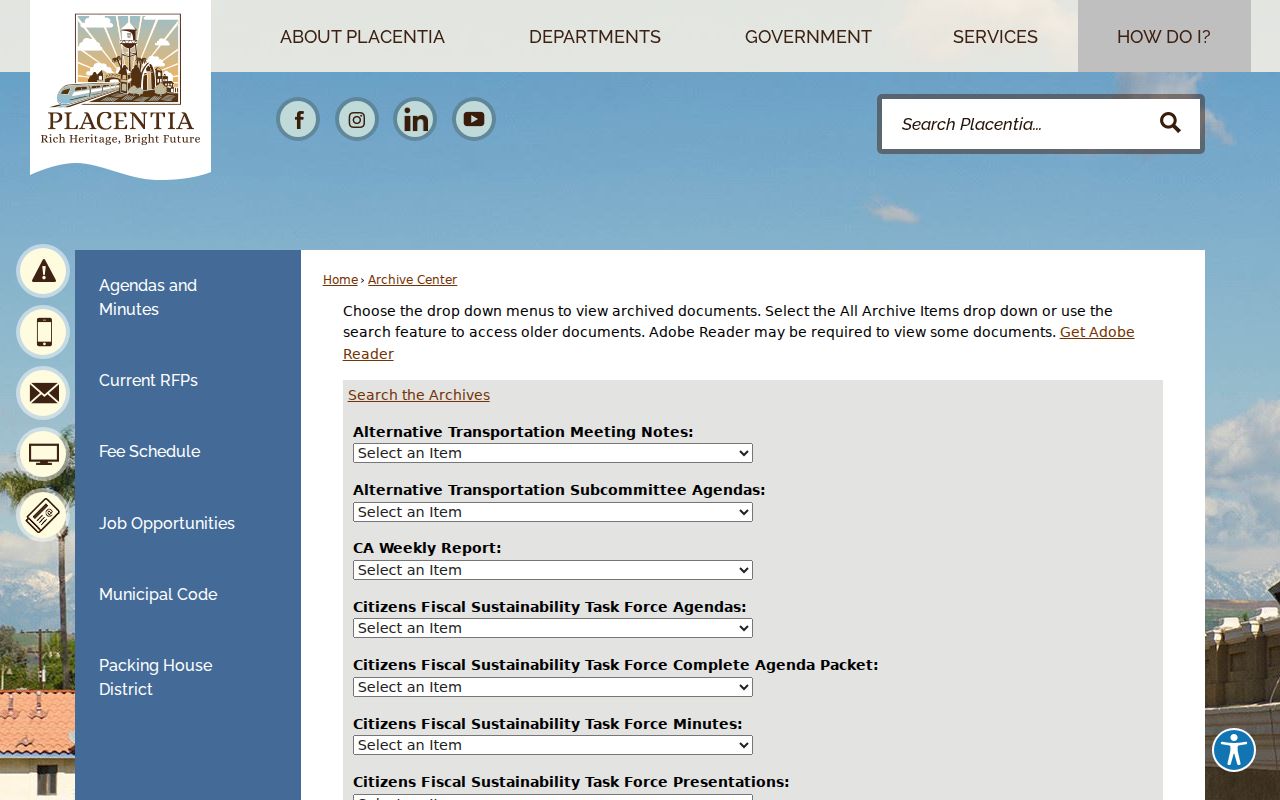
Keep municipal archive results separate from county directory citations because the two custodians preserve different record genres.
Preserve Placentia Family Sources
The Placentia Library Memory Lab is a separate three-hour do-it-yourself preservation service. The research describes support for VHS, audio cassette, floppy, DV or video, photographs, negatives, slides, and 8mm or Super 8 formats. A library card, agreement, orientation, and suitable storage are required. The lab does not create a directory search, but it can preserve resident-created material that helps explain a photograph, address, school group, or civic organization.
Use the lab's preservation route alongside, not instead of, the History Room, NARA, Archives, or a county custodian. Record who supplied an image, the date or era stated by the source, and any uncertainty in the caption. Oral histories also need to be cited as a narrator's account and corroborated with dated records.
Open the Placentia Memory Lab source page to document the local preservation channel.
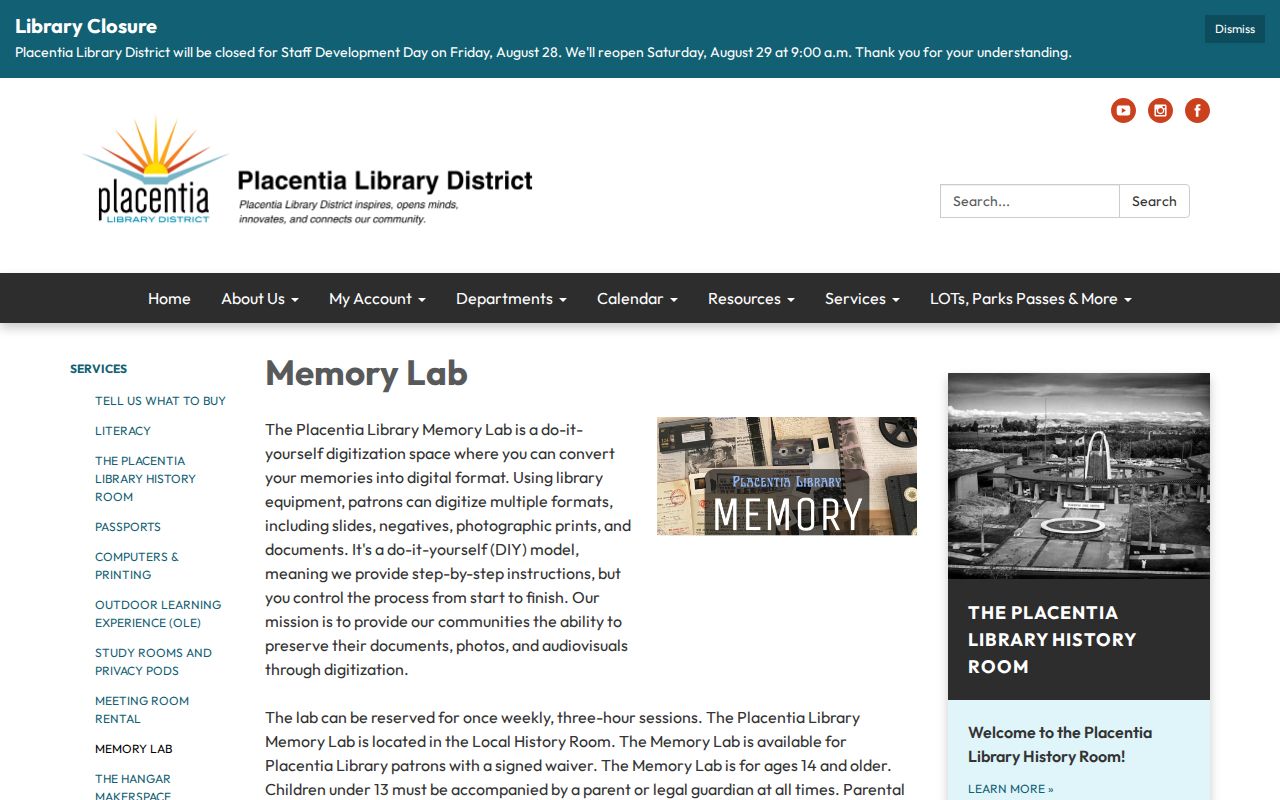
Preserved family media can supply context for a directory entry while keeping the historical source distinct from an official public record.
The Placentia Directory Shelf Still Needs Confirmation
The verified record is valuable because its limits are clear. The NARA inventory confirms 1926, 1929, and 1931 regional volumes, but the publisher is not identified. No openly inspectable Placentia page was found, so no sample resident line should be invented. The library does not publish exact city-directory, reverse-directory, obituary-index, newspaper-microfilm, or subscription-database runs. The Archives pre-1960 notice does not establish a last printed year. Exact street sections and abbreviation keys must be confirmed from a holding institution.
Use this timeline to route the next request:
| 1889-1926 | State Archives homestead run and documented Orange County deed-volume period. |
|---|---|
| 1926 | Placentia incorporation and first verified NARA directory year including the locality. |
| 1929-1931 | Verified NARA regional directory years for pairing with the 1930 census. |
| 1983-1984 | Orange County Archives creation and organization, with older county material routed to the archive. |
| 2026 | Research status: 1950 is the latest public federal census; local shelf runs remain partly unpublished. |
When a directory find needs one-person verification, preserve the volume citation and then use the Placentia resident lookup workflow for current, court, vital, or business records. That preserves the historical collection's role without turning an old line into a current identity claim.